Blogs

Explore the latest insights, trends, and tips in tech education.

Teachers constantly juggle lesson planning, grading, and administrative duties while striving to engage students with fresh, meaningful content. But what if there was a way to save time while still providing high-quality instruction? Content repurposing—a strategy often used in content marketing—can be just as powerful in the classroom.
AI-generated writing in robotic monotone is insufficient to produce creative, academic, free-thinking agents of tomorrow. In our classrooms today, students should be crafting hybrid drafts—interweaving their ideas with AI-generated summaries, outlines, or sentence stems
In 1984, educational psychologist Benjamin Bloom introduced a startling finding that transformed how we think about student learning. Known as Bloom’s Two Sigma Problem, the research showed that students who received one-on-one tutoring performed two standard deviations—two sigmas—better than those in traditional classroom settings.
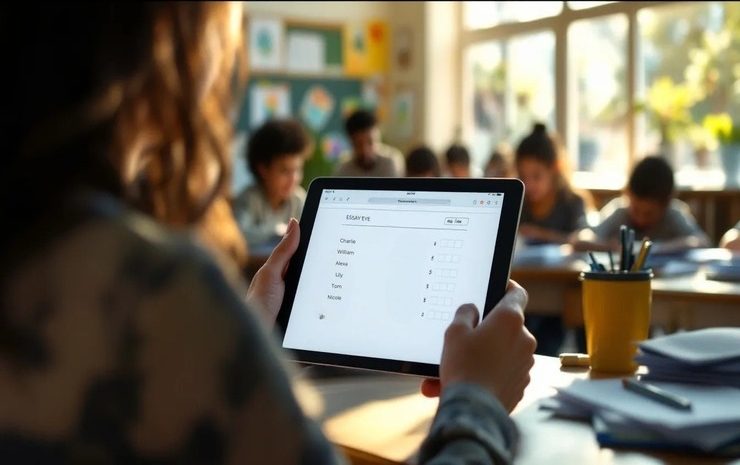
In today’s rapidly evolving educational landscape, the integration of artificial intelligence (AI) into classrooms is no longer a novelty—it is a necessity. With rising class sizes, increased demands on teacher time, and the need for personalized learning, AI tools like Essay Eye — an advanced AI-powered essay grader — are poised to support educators in meaningful and measurable ways.
In an era marked by the accelerating convergence of technology and pedagogy, the integration of artificial intelligence (AI) into the educational landscape has transitioned from speculative possibility to operational imperative. As principals, we are uniquely positioned at the intersection of leadership, instructional vision, and systemic transformation.
As artificial intelligence tools like ChatGPT become more common in schools, many teachers feel caught in an arms race of AI detection. New detection software promises to identify AI-written content—but too often, it misfires. False positives can harm student trust and lead to unnecessary conflict
In the grand theater of education, we are frequently and justly reminded of the virtue of differentiated instruction. No two students, we say, are alike — and so our pedagogy must flex and respond with sensitivity to varied learning  styles, backgrounds, and capacities. Yet, in our near-exclusive emphasis on instructional differentiation, we have neglected its quiet, necessary twin: AI differentiated assessment.
Are you a teacher looking to save time, enhance student engagement, and bring cutting-edge technology into your classroom? Welcome to Essay Eye’s ultimate guide to using AI tools for teachers like ChatGPT — a practical, teacher-friendly resource designed to help you unlock the full power of artificial intelligence for grading, lesson planning, student creativity, and more.
The growing integration of AI essay graders in classrooms is transforming the way teachers assess student writing. As educators explore these tools, professional development must focus on understanding AI-powered writing feedback.