

It’s mid-September, leaves just starting to turn in the Midwest, and stacks of essays loom on a teacher’s desk like unspoken accusations. The back-to-school buzz has faded; now reality bites—deadlines for parent conferences, lesson plans for the upcoming unit on the American Revolution, and oh, those 30 seventh-grade responses to “What does freedom mean?” waiting to be marked. Teachers like Ms. Garcia, who’s been at it for 15 years in a bustling Chicago public school, know the drill all too well. Grading isn’t just a chore; it’s the quiet forge where student voices sharpen or dull, and tools like AI for educators can lighten the load while keeping the craft alive. Yet even the best intentions falter under the weight. What if there were ways to streamline the process without losing the human touch? Simple shifts, drawn from the trenches of real classrooms, can transform drudgery into something almost—dare we say—rewarding.
These five tips aren’t flashy theories. They’re battle-tested habits, honed across districts from California Title I schools to AP hallways in New England. They nod to frameworks like Common Core, where evidence-based claims reign supreme, but they flex for the unexpected: that kid who weaves poetry into a science report, or the one whose grammar trips but ideas soar. Let’s dive in.
Tip 1: Anchor Everything in a Rock-Solid Rubric
Rubrics. Some teachers eye them warily, like old maps that promise treasure but deliver detours. Understandably so—too rigid, and they stifle the spark; too vague, and fairness evaporates. But here’s the quiet truth: a consistent rubric isn’t a cage; it’s a compass, guiding both grader and writer through foggy terrain.
Consider Ms. Garcia again. Last fall, as the chill set in and her eighth-graders tackled narrative essays on personal heroes, she revamped her old rubric with help from AI for educators. No more winging it on “good effort” scores. Instead, clear bands for conventions (that pesky comma splice), organization (does the arc build like a wave?), and content depth (evidence that sticks, not slips). The result? Grading sessions halved—from late nights to focused afternoons—and students, armed with the same map, started self-assessing before turning in drafts. One compound-complex beauty from her class: “While heroes often wear capes in stories we love, the real ones emerge in quiet acts, like my abuela’s hands kneading dough during storms that tested our family’s resolve; without her steady rhythm, we’d have crumbled too.”
It’s no secret that consistency breeds trust. Students see the why behind a 3/4 in analysis, not just the number. And for teachers? Less second-guessing. As one veteran put it in an Education Week piece, clear criteria, enhanced by AI for educators, form the backbone of any system worth its salt.
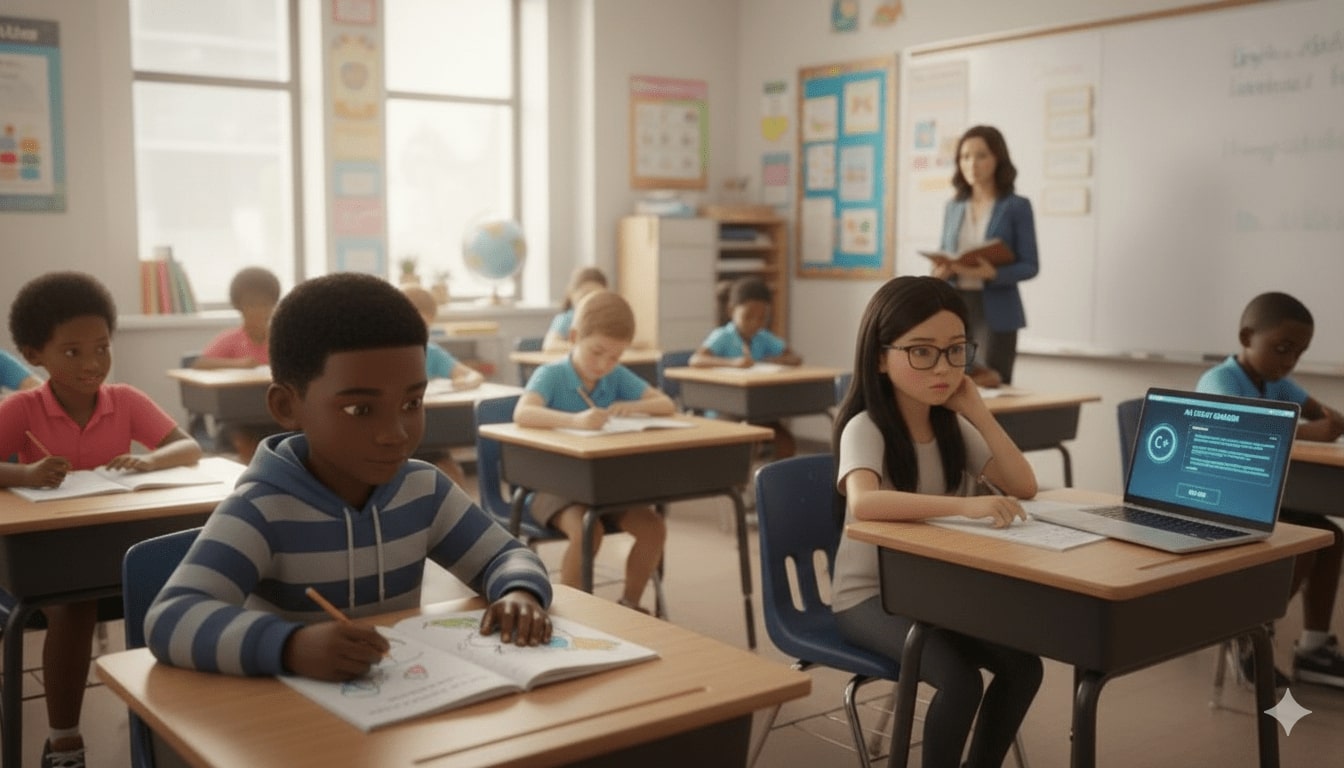
Tip 2: Layer Feedback Like a Skilled Editor, Not a Red Pen Avenger
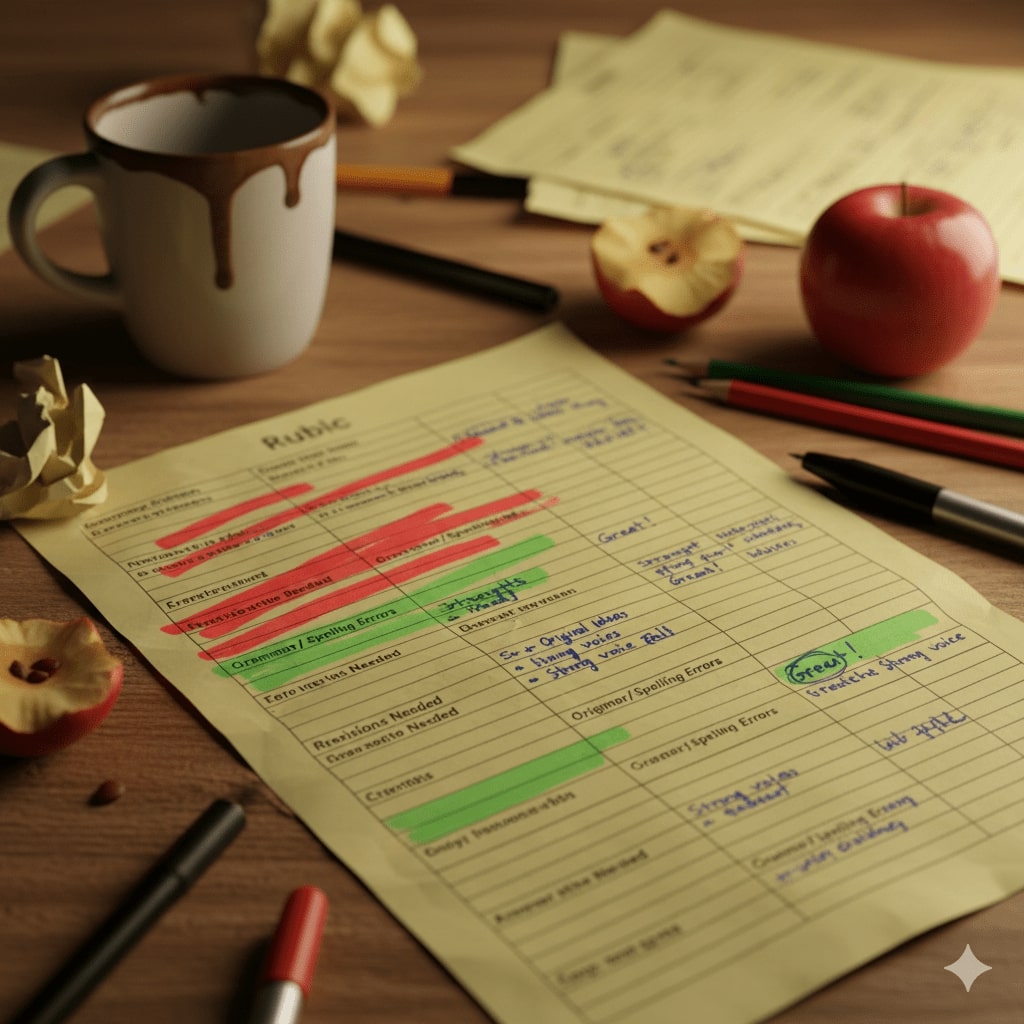
Feedback. The word alone conjures visions of marathon marking sessions, where every marginal note feels like chipping away at a mountain. But what if it weren’t a solo siege? What if layers—specific, balanced, alive—turned correction into conversation, aided by an AI grader?
Short and sweet: Praise first. Then pinpoint. Then propel. Ms. Martinez, a high school English lead in Atlanta’s humid spring terms, swears by this rhythm. Her juniors, grinding through AP Lit analyses of The Great Gatsby, get comments that spotlight the gold: “Your metaphor linking the green light to unattainable dreams crackles with insight.” Followed by the nudge: “Here, splice that run-on for punchier rhythm.” And the push: “Next time, weave in one more textual quote—watch how it amplifies the echo.” An AI grader can flag those run-ons, freeing Ms. Martinez to focus on the soul of the work.
This isn’t fluffy; it’s strategic. Detailed layers foster revision, turning a middling draft into something polished. Time is the rarest resource a teacher has, after all—squander it on vague “see me,” and motivation wanes; invest in layers, and students revise with fire. Some may grumble that it’s more work upfront. In truth, it elevates the personal touch, making grading feel less like judgment and more like partnership, especially when paired with AI for educators. Rephrase for emphasis: layers build writers. Layers build confidence. Layers, simply, build.
Tip 3: Nudge Toward Critical Thinking—Evidence, Not Echoes
Essays thrive on thought, not regurgitation. Yet how often do stacks reveal echoes of Google, not the writer’s soul? The fix? Grade with an eye for the chain: claim, evidence, analysis. Make it your mantra, and let an AI essay grader streamline the process.
Ms. Martinez—yes, that same Atlanta innovator—once shared a tale from his sophomore history class. Winter break loomed, NGSS-aligned prompts on climate impacts due, and one essay stood out: bold claims on renewable energy, backed by cherry-picked stats, but no dissection of trade-offs. His feedback? A gentle prod: “Strong start with solar viability; now, what shadows lurk in the supply chain—rare earth mining’s toll, perhaps?” The rewrite? A powerhouse, grappling with nuance like a debate champ, with an AI essay grader catching structural gaps to save time.
Rhetorical pause: What would grading look like if every score rewarded wrestling, not reciting? Parallel paths emerge—alliteration in action: Probe points. Pursue proof. Ponder purpose. This tip, philosophical at its core, reminds us that writing improvement with AI hinges on depth. Tools can flag gaps, sure, but the human spark? That’s in urging students to connect dots others miss. Across Title I schools in Texas, where class sizes swell, this approach yields dividends: fewer rote recitals, more revelations.

Tip 4: Harness AI Tools for AI Essay Evaluation—Your Silent Sidekick in the Stack
Grading marathons drain the joy from teaching; that’s no exaggeration. Enter the AI essay grader—the unflashy ally that sifts the mundane, freeing bandwidth for what matters. Not as replacement, mind you, but enhancer: an essay checker that spots grammar gremlins, an AI grader that tallies structure scores in seconds.
Imagine the shift. In a Bay Area middle school, where fall fog rolls in with 40-paper piles, one team slashed review time by seven hours weekly—plausible stat from district pilots— using these digital scouts. The AI essay grader flags inconsistencies; the teacher layers in the heart: “This thesis sings—now harmonize with varied sentence lengths.” If feedback arrives faster, revision becomes more powerful, indeed. Balanced reflection: Some view AI as cold calculus. Yet it amplifies warmth, spotting patterns a tired eye might miss, like recurring passive voice in a sea of STEM narratives.
Gently ironic, isn’t it? We chase efficiency in an era of endless scroll, only to find it in code that mimics our scrutiny. No wonder writing improvement with AI gains traction—from elementary prompts to college apps. Just wield it wisely: calibrate to your voice, lest the machine’s hum drown the human hum.

Tip 5: Tie It All to Standards—Common Core’s Compass, Not Chains
Standards like Common Core get a bad rap—bureaucratic burdens, some whisper. But strip away the jargon, and they’re lifelines: benchmarks that ensure equity, from rural Oregon one- rooms to urban powerhouses. Grade with them woven in, and essays don’t just pass muster; they propel growth.
Take a ninth-grade crew in Seattle, rain-lashed October, dissecting poetry through evidence lenses. Their rubric? Aligned tight: purpose (does it persuade?), elaboration (quotes that breathe), conventions (clean as fresh print). Scores aren’t arbitrary; they’re signposts toward mastery. “Your analysis of Frost’s fork in the woods reveals choice’s weight,” one note read, “—align it closer to RL.9-10.1 for citation precision, and it’ll shine.”
Universal truth here: Alignment isn’t constriction; it’s constellation, stars guiding the lost voyager. If rubrics falter under pressure—deadlines, diverse needs—standards steady the ship. In truth, they democratize excellence, especially in under-resourced spots where every minute counts, and an AI grader can ensure alignment with a quick scan.
As the semester’s embers glow toward winter break, these tips circle back to the start: grading as craft, not curse. Ms. Garcia and Ms. Martinez might nod in quiet accord—it’s messy, human work, laced with triumphs small and seismic. Lean into rubrics that breathe; feedback that builds; thinking that probes; tech that lightens; standards that ground. The essays? They’ll thank you—with words that linger. For more on reshaping grading rituals, peek at Education Week’s teacher spotlights; they’re gold.

Final Reflection: Grading as a Craft, Not a Curse
As the semester’s embers glow toward winter break, these tips circle back to the start: grading as craft, not curse. Ms. Garcia and Ms. Martinez might nod in quiet accord—it’s messy, human work, laced with triumphs small and seismic. Lean into rubrics that breathe; feedback that builds; thinking that probes; tech that lightens; standards that ground. The essays? They’ll thank you—with words that linger. For more on reshaping grading rituals, peek at Education Week’s teacher spotlights; they’re gold.